10 Greatest Vampire Movie Masterpieces Of The Last 100 Years, Ranked
9 minutes reading
Saturday, 7 Feb 2026 23:54 119 german11
Vampire cinema has endured for a full century because the monster is endlessly adaptable. Sometimes vampires represent forbidden desire, sometimes cultural fear, sometimes immortality itself as a curse rather than a gift. Across decades, filmmakers from wildly different backgrounds have used the vampire myth to explore religion, sexuality, colonialism, loneliness, and death.
Unlike many horror icons, vampires evolve with the era that creates them, shifting tone, style, and symbolism without losing their core identity. From silent-era atmosphere to surreal modern minimalism, the best vampire movies are rarely just about blood. They are about obsession, decay, and humanity reflected through the undead — leaving a permanent bite mark on cinematic history.
Black Sunday (1960)
Barbara Steele as Asa Vadja in Black Sunday (1960)
Mario Bava’s Black Sunday stands as one of the most visually striking vampire films ever made. Shot in stark black and white, the movie transforms gothic horror into something dreamlike and nightmarish. Barbara Steele’s dual performance anchors the film, presenting vampirism as both seductive and grotesque.
Unlike earlier vampire movies that relied on stage-bound stiffness, Black Sundayfeels fluid and painterly. It beautifully deploys shadows, fog, and movement to create an oppressive atmosphere. The violence, particularly the infamous opening execution scene, pushed boundaries for its time and helped usher in a more graphic era of horror.
Bava’s camera lingers, allowing dread to seep in rather than relying on shock alone. More than a genre milestone, Black Sunday is a masterclass in mood. It seamlessly demonstrates that vampire films can be visually poetic while still deeply unsettling and emotionally resonant.
Dracula (1932)
Bela Lugosi as Dracula peeking behind a wall
Tod Browning’s Dracula is the foundation upon which nearly all vampire cinema was built. Bela Lugosi’s performance defined the character for generations, establishing the elegant, aristocratic vampire as a cultural archetype. His deliberate speech, hypnotic gaze, and commanding presence turned Dracula into a figure of dark allure rather than a mindless monster.
From gothic mansions to suburban nightmares, these haunted house masterpieces redefined cinematic fear and left legacies that still shape horror.
In fact, each of these features became synonymous with Dracula from that moment onwards. Though the film’s stage origins are evident in its pacing and blocking, its atmosphere remains unmatched. Sparse music, heavy shadows, and lingering silences give the movie an eerie stillness that modern horror often lacks.
Dracula also cemented the vampire as a cinematic icon, influencing everything from costume design to performance style. Interestingly, while in production, Universal Pictures simultaneously produced a Spanish-language rendition of. Rather than recreate the movie exactly (as was planned), the filmmakers sought to improve open the US version, and in many ways succeeded.
Cronos (1993)
A man with a bloody face from Cronos.
Guillermo del Toro’s Cronos reinvents vampirism as a tragic disease rather than a supernatural curse. Centered on an ancient mechanical device that grants eternal life at a horrific cost, the film blends horror with melancholy and moral complexity. Rather than fangs and capes, Cronos presents vampirism through obsession, decay, and physical deterioration.
Federico Luppi’s gentle performance grounds the film in humanity. This makes the transformation painful rather than thrilling. Del Toro’s fascination with clockwork, insects, and corrupted innocence is already fully formed, giving the film a tactile, unsettling texture.
Cronos stands out for its empathy, framing immortality as something that isolates and destroys relationships. It’s less interested in fear than consequence. By stripping vampirism of its romanticism, Cronos paved the way for more emotionally driven monster stories, proving the genre could be intimate, thoughtful, and deeply personal.
Bram Stoker’s Dracula (1992)
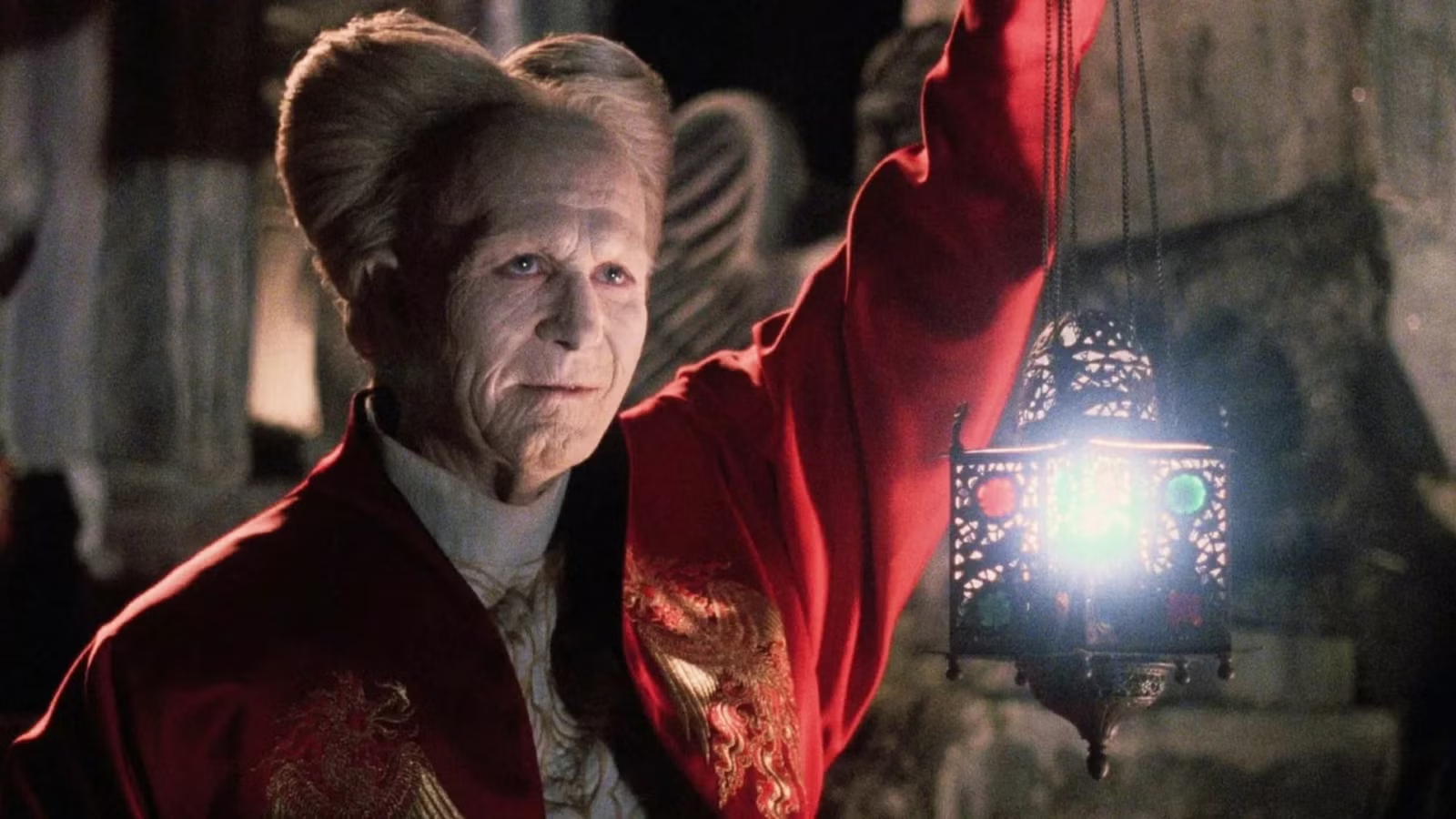
Bram Stoker’s Dracula the Count and his shadow coming close to Jonathan
Francis Ford Coppola’s Bram Stoker’s Dracula is a maximalist explosion of gothic romance, horror, and operatic excess. Rejecting realism, the film embraces theatrical sets, practical effects, and stylized performances to create a fever dream of blood and desire. Gary Oldman’s Dracula is tragic, monstrous, and heartbreakingly romantic.
Oldman’s performance transforms the character into a centuries-long love story rather than a simple predator. The film’s commitment to in-camera effects gives it a surreal, handcrafted quality rarely seen in modern blockbusters. Coppola reclaims the sensuality at the heart of vampire mythology, foregrounding eroticism, obsession, and immortality’s emotional toll.
While divisive upon release, the film has aged into a bold artistic statement. Bram Stoker’s Dracula explores the myth’s emotional extremes. It presents vampirism as both damnation and desperate longing intertwined in unforgettable cinematic form.
A Girl Walks Home Alone At Midnight (2014)
A Girl Walks Home Alone At Night screenshot of the main vampire in black and white
Ana Lily Amirpour’s A Girl Walks Home Alone At Night is a radical reinvention of vampire cinema through minimalism and mood. Set in a fictional Iranian ghost town, the film blends vampire mythology with western imagery, indie romance, and stark social commentary. The vampire herself is less a monster than a silent observer.
From voodoo slaves to flesh-eating hordes, these zombie masterpieces reshaped horror, redefined fear, and changed the horror subgenre forever.
She glides through empty streets on a skateboard, punishing cruelty while craving connection. Shot in luminous black and white, the movie feels timeless, detached from any specific era. Music, stillness, and negative space do as much storytelling as dialogue.
Amirpour uses vampirism as a metaphor for alienation, gender, and power without heavy exposition. The result is hypnotic rather than frightening, romantic without sentimentality. A Girl Walks Home Alone At Night proves that vampire stories don’t need spectacle to endure. Sometimes all they need is atmosphere, restraint, and a pulse that quietly refuses to die.
Horror Of Dracula (1958)
Christopher Lee’s Dracula hissing at a victim in Horror of Dracula.
Upon release, Horror of Dracula boldly refined the vampire genre by injecting it with color, sexuality, and violence. Christopher Lee’s towering performance cast Dracula as a physical, predatory force rather than a distant aristocrat. Hammer Horror’s use of vivid blood, low-cut costumes, and heightened emotion shocked audiences accustomed to restrained gothic horror.
Terence Fisher’s direction balances elegance with brutality, giving the film a relentless forward momentum. Unlike earlier adaptations, this version emphasizes Dracula’s animalistic hunger. It presents him as dangerous in a way that resonated with post-war sensibilities.
Horror of Dracula’s success launched an entire era of Hammer vampire cinema, influencing decades of genre storytelling. Horror of Dracula modernized the myth and weaponized it. It made vampires terrifying, sensual, and commercially powerful all at once, reshaping horror’s future in the process.
Only Lovers Left Alive (2013)
Tilda Swinton and Tom Hiddleston embracing in Only Lovers Left Alive
Jim Jarmusch’s Only Lovers Left Alive transforms the vampire myth into a meditation on art, time, and cultural decay. Tilda Swinton and Tom Hiddleston play ancient lovers drifting through centuries, sustained not by bloodlust but by creativity and memory. Vampirism here becomes a metaphor for endurance, watching civilizations rise and collapse while clinging to beauty.
The film rejects traditional horror in favor of mood, music, and philosophical conversation. Jarmusch’s languid pacing mirrors immortality itself. Here, urgency fades and meaning must be actively preserved.
Blood is consumed like fine wine, reinforcing the idea of refined survival rather than predation. Only Lovers Left Alive feels deeply romantic without idealizing immortality. It portrays eternal life as exhausting, lonely, and fragile. In doing so, it offers one of the most mature and introspective vampire films ever made, quietly devastating in its restraint.
The Hunger (1983)
John and Miriam about to kiss in The Hunger 1983
The Hunger is a sleek, stylish nightmare that fuses vampirism with erotic obsession and existential dread. Directed by Tony Scott, the film bathes immortality in neon shadows, haunting music, and cold sensuality. Catherine Deneuve’s ageless vampire embodies beauty and control, while David Bowie’s tragic decline exposes the cruel lie behind eternal youth.
Unlike traditional vampire narratives, The Hunger emphasizes emotional dependency rather than survival. Immortality is seductive, but abandonment is inevitable. The film’s fractured structure and dreamlike imagery mirror the instability of its characters’ lives.
The Hunger’s influence on fashion, music videos, and gothic aesthetics is immeasurable. While divisive at release, The Hunger has endured as a cult masterpiece. It presents vampirism as a curse of attachment, where love is weaponized and eternity guarantees suffering. Few vampire films capture decay beneath beauty as elegantly or disturbingly.
Vampyr (1932)
The ringing of the bell in Vampyr
Carl Theodor Dreyer’s Vampyr is one of the most haunting and experimental horror films ever made. Eschewing conventional narrative clarity, the film drifts through dream logic, shadowy imagery, and unsettling stillness. Vampirism here feels less like a monster story and more like an infection of reality itself.
Dreyer uses light, fog, and silence to create an atmosphere of constant unease. The world feels wrong even when nothing overtly frightening happens. The famous coffin point-of-view sequence remains one of cinema’s most unsettling images.
Vampyr’s power lies in suggestion rather than explanation, making it deeply disorienting. Unlike Dracula, it offers no charismatic anchor, only creeping dread. The film demands patience but rewards it with an unforgettable experience. Vampyr was abstract, poetic, and terrifying – all without relying on spectacle or traditional horror structure.
Let The Right One In (2008)
Eli covered in blood in Let the Right One In
Let the Right One In is a devastating blend of vampire horror and coming-of-age drama. Set against a cold, wintry Swedish backdrop, the film uses vampirism to explore loneliness, violence, and emotional dependence. Eli is both child and predator, innocence and monster coexisting uncomfortably in one body.
Let the Right One In refuses easy moral answers, presenting survival as a cruel necessity rather than a choice. Director Tomas Alfredson favors restraint, letting silence and the environment speak louder than dialogue. The violence, when it arrives, is sudden and shocking, emphasizing consequences rather than thrills.
At its core, Let the Right One In is about connection between outsiders, even when that connection is dangerous. Let the Right One In redefined modern vampire cinema by stripping away glamour and romance. What remains is a chilling, heartbreaking portrait of love, producing the greatest vampire movie since 1922’s Nosferatu.























No Comments