
how Xiangwu Xie turned vertical drama into Hollywood’s fastest new hustle – Film Daily
The entertainment industry has spent years insisting audiences wanted “premium.” Longer runtimes. Bigger universes. Slower prestige pacing. Eight-hour streaming seasons where people stare moodily out of windows while executives call it “cinematic storytelling.”

Then millions of viewers started watching pregnant secret heirs get slapped in portrait mode on their phones while sitting on the toilet.
And the numbers stopped being funny.
Short drama revenue explodes dramatically
According to Sensor Tower, global in-app purchase revenue for short drama platforms hit nearly $700 million in Q1 2025 alone, roughly four times higher than the same period in 2024. Downloads surged past 370 million during that quarter, with cumulative global installs nearing 950 million. The United States accounted for nearly half the worldwide revenue, generating close to $350 million in Q1 2025.

Hollywood spent years trying to figure out how to compete with TikTok attention spans. Vertical drama just quietly did it.
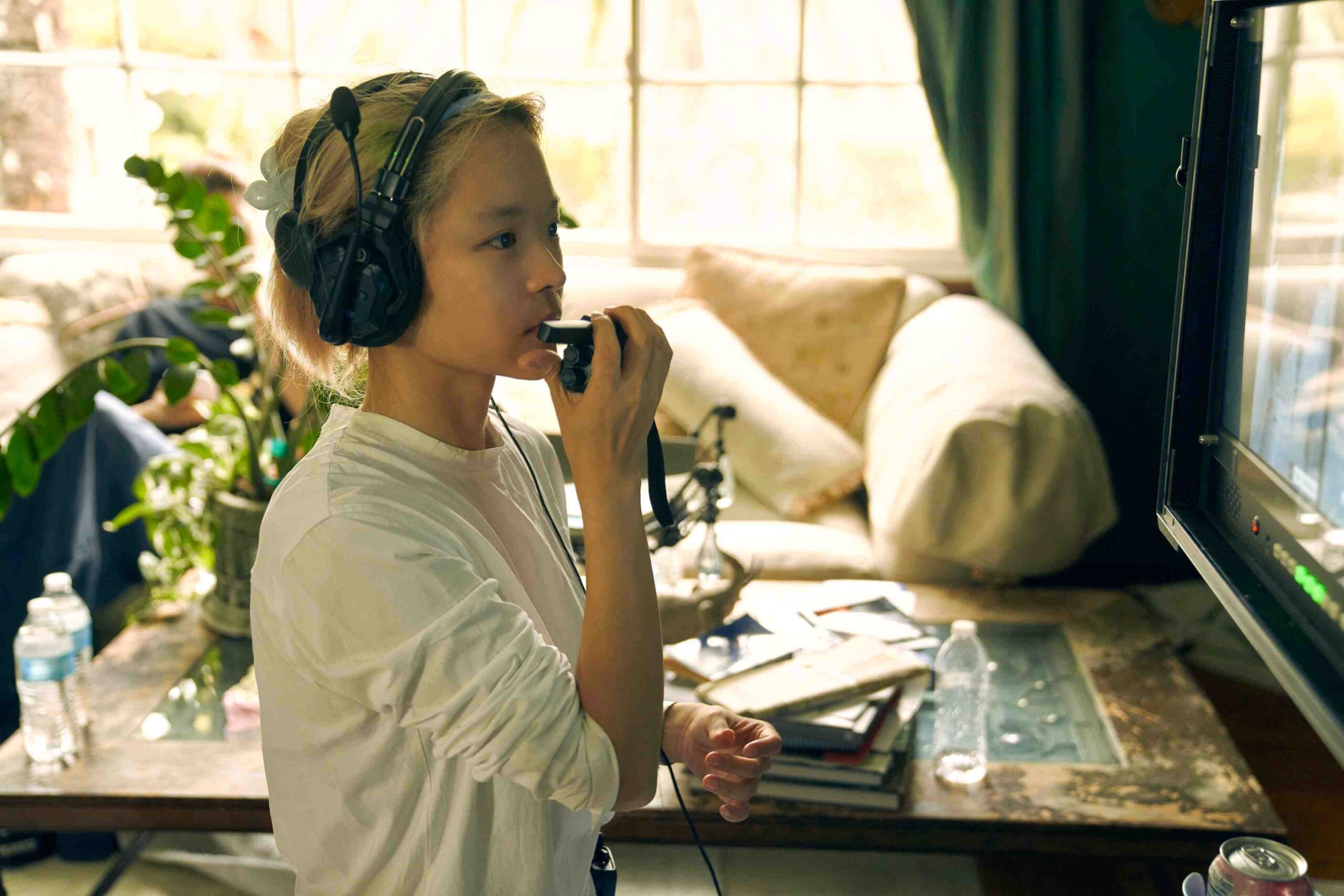
At the center of that shift is Xiangwu Xie, also known as Carol Xie, the Los Angeles-based founder of Ahah Lava . Her work sits directly inside one of the strangest and fastest-growing sectors in modern entertainment: highly emotional serialized vertical dramas engineered for phones, speed, retention, and compulsive viewing.
Xie’s breakout hits shatter expectations
Her breakout projects include Got Pregnant With My Ex-Boss’s Baby, which crossed 12 million YouTube views, and Till Truth Do Us Apart, which passed 96.2 million views on TikTok.
The titles sound algorithmically generated by an AI trained exclusively on divorce court and Wattpad. That is partially the point.
The vertical drama business runs on emotional immediacy. Betrayal. Revenge. Wealth fantasy. Forbidden romance. Secret babies. Power imbalance. Public humiliation. Cliffhangers every few minutes. It is not pretending to be restrained prestige television. It is trying to make someone immediately press “next episode” while standing in line at Starbucks.
Vertical storytelling proves its power
And increasingly, it works.
What makes Xie interesting is not merely that she understands the format commercially. It is that she treats vertical storytelling as a legitimate filmmaking language rather than disposable internet sludge.
That distinction matters.
Traditional filmmakers stay skeptical
A lot of traditional filmmakers still speak about vertical drama the way indie rock fans once spoke about pop music: beneath them until the checks clear.
Xie does not carry that insecurity. She approaches the medium clinically, structurally, and commercially.
“What pulled you from traditional film into vertical drama?” we asked.
From shorts to vertical domination
“I started in the traditional short content like commercial, short film and music video,” she said. “I was trying to find a way to get into the feature film world and become more involved in the narrative content. I found a Youtube channel called LoveBuster which has millions of views and their videos are all about 10 minutes long. Around that time, I also saw some vertical content from ReelShort, which inspired me to create short content in both vertical and horizontal formats.”
That trajectory says a lot about where entertainment is going.
Traditional Hollywood pipelines have become brutally difficult. Financing is slower. Development cycles are longer. Mid-budget opportunities have collapsed. Entry-level directing pathways have narrowed. Even successful actors routinely complain about waiting months between jobs.
Drama fills Hollywood’s financing vacuum
Vertical drama exploded directly into that vacuum.
Unlike prestige television, which can spend years trapped in development hell while executives workshop notes about “tone,” vertical drama operates like an industrial entertainment engine. Development, production, casting, and post-production move at terrifying speed.
Projects can go from idea to release within a few months.
Speed fuels industry opportunities
That efficiency has created opportunities for filmmakers and actors who might otherwise spend years waiting for permission.
Xie herself describes the business as system-driven rather than chaos-driven.
“How do you balance speed (2–3 month cycles) with quality?”
Systematic workflow drives quality
“By building a system,” she explained. “We handle development, adaptation, production, and post in a very organized workflow. The speed comes from preparation, not from lowering standards. We know what matters most on camera: casting, performance, visual element, pacing, and clear story logic.”
That emphasis on “clear story logic” comes up repeatedly in her thinking.
People outside the format often assume vertical drama succeeds purely because audiences want exaggerated nonsense. But Xie argues the emotional mechanics still have to function correctly.
Logic matters behind viral hits
“What did you learn from Got Pregnant With My Ex-Boss’s Baby hitting 12M+ views?”
“It proved that commercial success is not only about big twists, dramatic slapping,” she said. “The audience still cares about character motivation and story logic. If the emotion is strong but the character behavior does not make sense, people drop off. That project showed me that fast storytelling still needs a solid foundation.”
That may be the biggest misunderstanding outsiders have about the format.
Heightened drama stays disciplined
Yes, vertical dramas are heightened. Yes, they move quickly. Yes, someone is probably getting betrayed by a billionaire every six minutes.
But structurally, the medium is highly disciplined.
Every scene has a job.
Emotional beats must land instantly
Every emotional beat must land instantly.
Every episode must create forward momentum.
“How do you structure pacing when episodes are ~1 minute?”
Compressed arcs keep viewers hooked
“I treat every episode like a compressed emotional arc,” Xie said. “You need a hook at the beginning, escalation in the middle, and a strong turn or cliffhanger near the end. There is very little room for slow setup, so every scene has to move either the plot or the relationship forward.”
That compressed pacing is one reason vertical drama increasingly resembles old-school serialized storytelling more than modern streaming television.
Classic soap operas understood this rhythm decades ago. So did pulp novels. So did tabloids.
Distribution reshapes storytelling
The difference is distribution.
Phones changed the visual grammar.
“Why did portrait storytelling click commercially where landscape didn’t?”
Portrait mode creates intimacy
“Because phones changed the way people watch,” Xie explained. “Portrait storytelling feels immediate and intimate. The character is closer to the viewer, and emotion reads faster. For romance, melodrama, betrayal, and conflict, that closeness works very well commercially.”
That “closeness” is critical.
Vertical framing changes performance itself. Facial expressions matter more. Eye movement matters more. Small reactions suddenly dominate the screen because the viewer is physically holding the character inches from their face.
Overacting kills vertical series
This is partly why overacting can kill a vertical series.
The frame punishes falseness.
“How do you approach casting when roles get 500–700 auditions?”
Casting for rhythm, not looks
“I look beyond appearance,” Xie said. “The lead needs to understand rhythm, emotion, and camera intimacy. In vertical drama, a small reaction can carry a scene because the frame is tight. I look for actors who can deliver emotion quickly without overacting.”
That demand has transformed the audition ecosystem in Los Angeles.
Actors who once struggled to get meaningful roles in traditional film or television are suddenly finding themselves leading internationally viewed projects.
Boom arrives amid Hollywood crunch
The vertical drama boom arrived at a particularly brutal moment for Hollywood performers. Industry strikes, streaming contraction, and collapsing pilot production left many working actors scrambling for survival.
Then short-form platforms started hiring aggressively.
“How has vertical drama changed opportunities for working actors?”
Actors gain rapid lead roles
“It has created more lead roles, more recurring work, and more chances for actors to be seen by large audiences,” Xie said. “Many actors who might wait years for a traditional breakout role can now build strong screen experience quickly.”
The economics matter too.
According to reporting referenced in the Global Times interview attached to Xie’s materials, top vertical drama actors can command roughly $2,000 per day.
Modest budgets yield solid income
That is not Marvel money. But for a rapidly scaling format with compressed schedules, it is real income.
And unlike many traditional productions, vertical drama shoots constantly.
One of the stranger realities of this business is that it has effectively become an international collaboration pipeline between Chinese story structures and American production infrastructure.
Chinese roots meet U.S. production
The DNA of many modern vertical dramas originated in Chinese micro-drama ecosystems, where serialized emotional storytelling already operated at enormous scale. U.S. adaptations inherited that structure but localized the emotional logic.
“How do Chinese-origin story structures translate to U.S. audiences?”
“The emotional core is the same: love, betrayal, power, family, revenge,” Xie explained. “But the character logic has to be localized. U.S. audiences may respond differently to gender roles, workplace power dynamics, family pressure, or moral choices. You cannot just translate the words. You have to adapt the behavior.”
Localization adds cultural nuance
That localization process is more sophisticated than critics often realize.
A lot of lazy commentary about vertical drama treats it like “cheap content.” But what these companies are actually doing resembles rapid-response global adaptation.
The emotional engines stay intact.
Cultural coding drives success
The cultural coding changes.
“What localization choices matter most for cross-border success?”
“Character motivation, natural dialogue, casting, cultural details, and relationship dynamics,” Xie said. “The story can keep its high-emotion structure, but the world has to feel believable to local viewers.”
LA fuels production value
That balancing act partly explains why Los Angeles has become such an important production base.
“What role does Los Angeles play in elevating production value?”
“Los Angeles gives us access to professional crew, actors, equipment, locations, and production standards,” Xie said. “That helps vertical drama look more cinematic, even when the schedule is fast and the budget is tight.”
Drama preserves Hollywood ecosystem
Ironically, vertical drama may be preserving parts of the Hollywood ecosystem that the traditional studio system increasingly neglects.
Crew members still work.
Actors still audition.
Sets and scenes stay fast
Sets still get built.
Scenes still get shot quickly.
In an industry increasingly dominated by endless franchise planning meetings, vertical drama is producing actual filmed material at industrial speed.
Cinematic lighting on tight budgets
That speed forces efficiency.
“How do you maintain cinematic lighting within tight budgets?”
“We plan the look before we shoot,” Xie explained. “We use standing sets, controlled environments, practical lighting, and efficient blocking. Cinematic lighting is not always about using more lights. It is about knowing where the emotion is and shaping the frame around it.”
Repeatable production logic
Still, the logic is obvious.
Vertical production thrives on repeatability.
Recurring environments reduce setup time.
Controlled locations boost output
Controlled locations reduce unpredictability.
Efficiency increases output.
The entire ecosystem behaves more like a highly optimized content factory than a traditional auteur-driven production model.
Addictive storytelling fundamentals
And yet, storytelling still matters enormously.
“What makes a vertical series ‘addictive’ at scale?”
“Clear emotion, fast conflict, strong hooks, and characters whose choices make sense,” Xie said. “The audience needs to understand the emotional stakes within seconds. Every episode needs a reason to continue watching.”
Irony takes a backseat
Notice what is absent from that answer: irony.
Traditional entertainment has become addicted to self-awareness. Characters wink at the audience constantly. Scripts apologize for sincerity before emotional moments even land.
Vertical drama does not apologize.
Commitment drives audience aggression
It commits.
That commitment may be why audiences respond so aggressively.
The medium understands something many prestige creators forgot: viewers often want emotional clarity more than tonal ambiguity.
Melodrama outpaces subtlety
“Why do melodramatic twists outperform subtle storytelling in this format?”
“Because the format is built for quick emotional reaction,” Xie explained. “Viewers are watching on phones, their attention is easily distracted. They only have about 3 seconds of attention for each piece of content. If you can’t catch their attention, they will swipe away immediately. Subtle storytelling can work, but it has to be translated into clear visual and emotional beats.”
Three seconds.
Three‑second attention battles
That is the battlefield.
Hollywood executives spent years pretending audiences naturally owed them patience. TikTok destroyed that illusion.
Now every medium is adapting.
Vertical drama adapts first
Vertical drama simply adapted first.
And unlike many streaming productions burning absurd amounts of cash, these series are often extraordinarily cost-efficient.
One industry insider quoted in the attached reporting claimed a short drama grossed more than $35 million on a budget of roughly $200,000.
ROI grabs industry attention
That kind of ROI gets attention fast.
Especially in a collapsing entertainment economy.
This is partly why major platforms are circling the space aggressively.
Budgets and returns still rising
“What is the ceiling for vertical drama budgets and returns?”
“The ceiling is still growing,” Xie said. “As the format becomes more competitive, budgets will rise for stronger casts, better sets, and higher production value. But the key advantage will still be efficiency. The return has to justify the speed and scale.”
Efficiency may ultimately be the defining word of this entire industry.
Efficiency eclipses artistry debate
Not artistry versus commerce.
Not prestige versus trash.
Vertical drama knows its market
Vertical drama understands exactly what emotional experience it is selling, exactly how audiences consume it, and exactly how quickly it must deliver payoff.
Traditional Hollywood increasingly struggles to say the same.
That does not mean vertical drama replaces cinema.
Coexistence, not replacement
Xie herself rejects that framing.
“Do you see vertical drama replacing or coexisting with traditional film?”
“Coexisting,” she said. “Traditional film and vertical drama serve different viewing habits. One is not simply replacing the other. Vertical drama is creating a new lane for mobile storytelling.”
History favors format stacking
That distinction matters because entertainment history rarely operates through total replacement.
Television did not kill film.
Streaming did not kill television.
Formats stack, habits fragment
TikTok did not kill YouTube.
Habits fragment.
Niche fills rapid emotional need
Audiences shift between modes depending on context.
Vertical drama fills a specific behavioral niche: rapid serialized emotional entertainment optimized for phones.
And increasingly, that niche is enormous.
Future: professional, global, integrated
“Where is this format in five years—fad or dominant medium?”
“I do not think it is a fad,” Xie said. “The current version will evolve, but vertical scripted storytelling is here to stay. In five years, I think vertical drama will be more professional, more global, and more integrated into the entertainment industry.”
She is probably right.
Vertical viewing now default
The audience behavior already exists.
People watch vertically by default now.
Phones are not secondary screens anymore. For millions of users, they are the primary screen.
Early stage awkwardness inevitable
Once that behavioral shift happened, storytelling language had to evolve with it.
That evolution is still in its awkward early phase. Some vertical dramas feel hilariously excessive. Some look rushed. Some scripts collapse under their own insanity. Some performances seem generated by a caffeinated soap-opera simulator.
But early television looked primitive too.
Formats mature over time
Early web video looked disposable.
Early streaming originals often looked cheap.
Formats mature.
Money professionalizes vertical drama
Money professionalizes everything.
And right now, vertical drama has money.
A lot of it.
Platforms shape creative pacing
The speed of that growth explains why companies like ReelShort, DramaBox, and NetShort are racing aggressively for market share.
“How do platforms like ReelShort and DramaBox shape creative decisions?”
“Platforms understand audience behavior very closely,” Xie explained. “Their data influences pacing, genre, episode structure, and hook placement. But the creative challenge is using that data without making the story feel mechanical. So the platform always trying to exploring new genres and character types. Whether from novels or original development.”
Algorithmic vs. human balance
That tension between algorithmic optimization and human storytelling may define the next decade of entertainment.
Because the data works.
The hooks work.
Retention tactics keep viewers
The retention tactics work.
But audiences eventually recognize soulless repetition.
Creators like Xie are trying to solve that problem before the format burns itself out.
Traditional background informs performance
Her own background helps.
Before entering vertical drama, Xie worked across commercials, short films, music videos, acting, and narrative production. According to her biography, she has spent seven years working across film production disciplines including directing, producing, and acting. Her work has screened through organizations and festivals including the Cannes World Film Festival, Flickers’ Rhode Island International Film Festival, NewFilmmakers NY, and the Student Los Angeles Film Awards.
That traditional background influences how she discusses performance.
Leads must make viewers care fast
“What separates a lead actor who converts views into revenue?”
“Since the camera is so close to them,” she said. “Their subtle facial expression become the most important part. how they differentiate characters in similar stories, and how they make the audience believe the relationship in such a short time, really matters. They need to make viewers care fast. A good lead does not just look right; they make the audience believe the fantasy and keep watching.”
That sentence — “make viewers care fast” — might be the defining challenge of modern entertainment generally.
Attention compressed, competition exploded
Attention has compressed.
Audiences are flooded with infinite alternatives.
Competing against every distraction
You are not merely competing against other shows anymore. You are competing against every possible distraction on earth.
Texts.
TikToks.
Instagram, DoorDash, group chats
DoorDash notifications.
Group chats.
Survival mechanism drives scripts
A viewer can abandon your story instantly.
Vertical drama evolved specifically to survive that environment.
That survival mechanism shaped the scripts themselves.
Vertical script beats traditional screenplay
“What defines a strong vertical script versus a traditional screenplay?”
“A strong vertical script gets to the point faster,” Xie said. “It has clearer emotional turns, more frequent hooks, and less atmospheric buildup. Traditional scripts can spend more time on mood and silence. Vertical scripts need immediate conflict and strong episode endings.”
That does not mean subtlety disappears entirely.
Compression becomes weaponized
Condensed.
Weaponized.
Silence must work faster too
Even silence has to work faster.
This is why filmmakers entering the format often fail initially.
“What are the biggest mistakes filmmakers make entering this space?”
Mistakes: too easy or too traditional
“They either treat it as ‘too easy,’ or they try to make it like traditional film,” Xie explained. “Both are mistakes. Vertical drama has its own rhythm, frame, audience behavior, and commercial logic.”
That “commercial logic” is unavoidable.
Unlike many prestige projects funded largely through branding strategy or subscriber retention, vertical drama often operates through direct monetization systems tied tightly to viewer behavior.
Attention converts to purchases quickly
Attention converts rapidly into purchases.
Retention converts into revenue.
The feedback loops are immediate.
Monetization tied to story integrity
“How do you think about monetization vs. storytelling integrity?”
“They are connected,” Xie said. “Good monetization comes from keeping people emotionally invested. If the story only chases clicks and the characters stop making sense, the audience eventually leaves.”
Again, story logic.
Audience tolerates absurdity, not dishonesty
That theme returns constantly in her answers.
The audience will tolerate absurdity.
They will not tolerate emotional dishonesty.
Heightened drama is engineered
That distinction is important because outsiders often confuse “heightened” with “lazy.”
The best melodrama is not random chaos.
It is emotional engineering.
Metrics: views, retention, revenue
And vertical drama engineers emotion extremely efficiently.
“How do platforms measure success?”
“What metrics matter more: views, retention, or revenue?”
Retention and revenue reveal true impact
“All three matter, but retention and revenue tell you more,” Xie explained. “Views show reach. Retention shows whether people care. Revenue shows whether the story is converting attention into real value.”
That answer probably terrifies traditional creatives.
Because it is brutally measurable.
No vague cultural impact claims
No vague “cultural impact.”
No abstract prestige discourse.
Pay, continue, stay engaged
Did they pay?
That is the game.
Massive audience continuation numbers
And right now, audiences are continuing in massive numbers.
The scale is hard to overstate.
Sensor Tower’s numbers suggest vertical drama is no longer a niche internet curiosity. It is becoming a major entertainment category with global infrastructure, recurring revenue, dedicated stars, industrialized production, and escalating platform competition.
Fast rise from niche curiosity
The weirdest part is how fast it happened.
A few years ago, many traditional industry people barely acknowledged the format existed.
Now executives monitor it obsessively.
Studios, actors, investors take notice
Actors chase roles.
Investors notice margins.
Hollywood pretends understanding portrait storytelling
Everyone suddenly pretends they always understood portrait storytelling.
Classic Hollywood behavior.
Still, the medium remains culturally underestimated because its aesthetics often look unserious to outsiders.
Loud titles, heightened emotions, aggressive pacing
The emotions are heightened.
The pacing is aggressive.
Lowbrow roots precede institutional acceptance
But historically, popular entertainment often looks “lowbrow” before institutions catch up.
Soap operas were mocked for decades despite building massive audiences.
Romance novels generated billions while critics sneered.
Reality TV precedent for vertical drama
Reality television became dominant despite endless cultural panic.
Vertical drama sits inside that same lineage.
The audience does not care whether critics feel intellectually superior.
Story works, audience cares
They care whether the story works.
And increasingly, these stories work extremely well.
That success has changed career trajectories rapidly.
Career trajectories reshape rapidly
The attached reporting mentions actors suddenly receiving recurring lead offers after years of industry invisibility.
For many performers, vertical drama became less of a side hustle and more of an actual career engine.
That transformation may ultimately reshape talent pipelines across Hollywood.
Fanbases push traditional studios to watch
Because once actors build large fanbases through vertical content, traditional studios start paying attention.
The same pattern already happened with YouTubers, TikTok creators, podcasters, and streamers.
Gatekeepers mock new formats until audience behavior forces adaptation.
Visionary rebranding follows speed shift
Then everyone suddenly rebrands themselves as visionary early adopters.
Hollywood has always behaved like this.
What changes now is the speed.
Vertical drama outpaces legacy systems
Vertical drama evolves faster than traditional entertainment systems can comfortably process.
And creators like Xie are helping build that infrastructure in real time.
“How does Ahah Lava maintain a consistent output of 1–2 series monthly?”
Full‑cycle workflow ensures output
“We built a full-cycle production workflow,” she said. “Development, adaptation, casting, production, and post are connected instead of separated. We have our own casting list, location and stable crews. That lets us move quickly while keeping the process controlled.”
Controlled speed.
That phrase basically summarizes the entire business.
Organized chaos drives escalation
The chaos is carefully organized.
The emotional escalation is precisely engineered.
The production pipeline is optimized aggressively.
People still crave stories
And underneath all of it sits a simple reality traditional Hollywood underestimated for too long:
People still desperately want stories.
They just consume them differently now.
Hybrid model defines future entertainment
Xie’s work exists exactly at that intersection — between old-school melodrama and algorithm-era viewing habits, between cinematic ambition and industrial efficiency, between Chinese-origin micro-drama structures and Los Angeles production systems.
That hybrid model may end up defining a major part of the entertainment business going forward.
Not because vertical drama replaces film.
Solves fragmented attention problem
Because it solves a different problem.
Modern audiences increasingly live inside fragmented attention environments. Entertainment that understands those rhythms wins.
Vertical drama understands them very, very well.
Fast feelings win audience hearts
More importantly, it understands something Hollywood periodically forgets while chasing prestige trends:
People like feeling things.
Fast.

Related posts





Latest Post








No Comments