
Is Ryan Gosling the only thing holding Project Hail Mary together – Film Daily
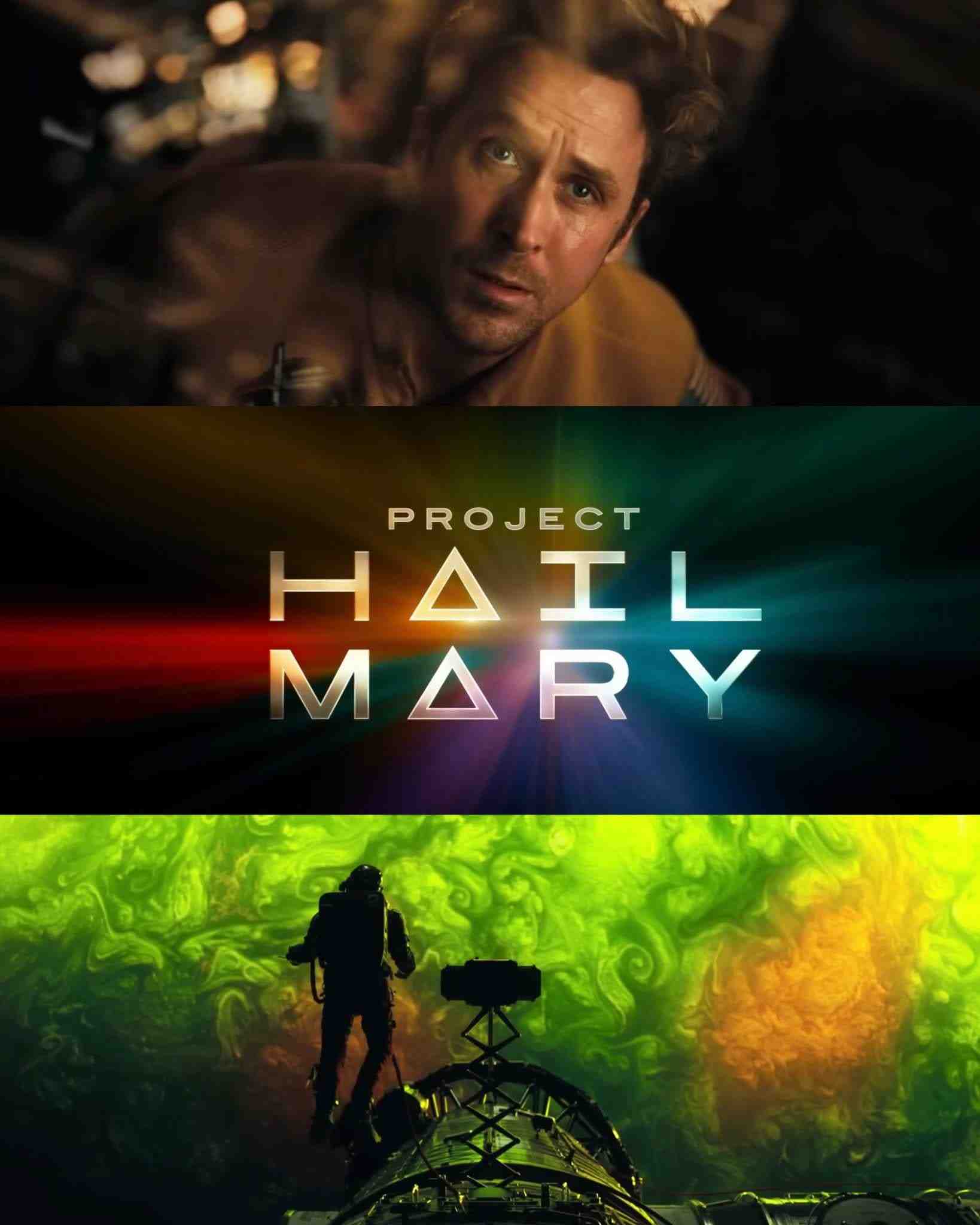
Ryan Gosling commands the screen in Project Hail Mary with a performance that turns a high-concept sci-fi gamble into a box-office phenomenon. The 2026 adaptation of Andy Weir’s novel has grossed over $638 million worldwide on a $200 million budget, fueled largely by his charm, commitment, and producing input. Yet critical consensus splits on whether the film’s derivative pacing and tonal swings hold up without him anchoring every solo stretch and puppet interaction. With Oscar buzz circling his work, the question feels urgent in a post-superhero landscape hungry for original spectacle.
Adaptation origins

Andy Weir’s 2021 novel arrived as a cerebral follow-up to The Martian, spending 41 weeks on the New York Times bestseller list. MGM snapped up rights for $3 million shortly after publication, seeing clear franchise potential in its hard-science mystery about a lone astronaut racing to save a dying sun. The story’s dense exposition and flashback structure demanded careful pruning for the screen, a task that fell to directors Phil Lord and Christopher Miller known for balancing spectacle with irreverence across The Lego Movie and Spider-Verse.
Early development leaned into the book’s isolation thriller elements while injecting buddy-comedy beats once the alien Rocky enters the frame. Screenwriters condensed global political context and lengthy scientific detective work, prioritizing emotional stakes between human and extraterrestrial. This shift transformed the source’s philosophical tone into something more accessible, though some viewers later noted the loss of Weir’s meticulous procedural rigor.
By attaching Gosling in March 2020 with an estimated $30 million salary, the project gained instant momentum. His dual role as star and producer signaled a five-year personal investment that shaped everything from zero-gravity choreography to the final cut’s hopeful coda. That dedication set Project Hail Mary apart from typical studio sci-fi assembly lines.
Gosling’s deep commitment

Ryan Gosling treated Project Hail Mary as a passion project from day one, telling interviewers he wanted a film his children could grow up watching. The Canadian actor logged months of stunt training and scientific consultations to portray middle-school teacher Ryland Grace waking amnesiac aboard a spaceship bound for Tau Ceti. His hands-on producing role influenced casting, creature design, and even marketing stunts like the Super Bowl football-through-donut sequence.
That level of ownership echoes his work on First Man, where physical and emotional realism elevated a historical drama. Here Gosling bridges the gap between Weir’s everyman protagonist and Lord and Miller’s comedic sensibility, adding layers of vulnerability that the novel’s more confident Grace never quite possessed. Crew members described him rehearsing solo monologues for weeks to nail the isolation sequences that comprise nearly half the runtime.
His post-Barbie momentum, riding a $1.4 billion cultural wave of Ken memes and awards-season goodwill, provided the perfect launchpad. Gosling’s ability to toggle between hilarious physical comedy and quiet heartbreak gave the film its gravitational center, something multiple critics explicitly credited with elevating material that occasionally felt glib on the page.
Directorial balancing act
Phil Lord and Christopher Miller brought their signature blend of visual invention and pop-culture wit to Project Hail Mary, yet the marriage with Weir’s hard sci-fi proved uneven. Their background in animated blockbusters helped realize the dazzling astrophage sequences and the intricate puppetry required for Rocky, but some sequences tip into sentimentality that undercuts the novel’s cooler detachment. The duo’s decision to foreground humor during solo stretches kept audiences engaged through two-and-a-half hours.
Production design leaned on practical effects wherever possible, especially in the spacecraft sets that allowed Gosling to perform extended one-man-show passages. Greig Fraser’s cinematography earned early Oscar whispers for its contrast between stark zero-gravity isolation and vibrant alien environments. Still, the tonal handoffs between comedy, wonder, and impending planetary doom occasionally register as emotional fake-outs rather than earned pivots.
Studio notes reportedly pushed for broader appeal, trimming some of the book’s more technical digressions. The result plays like a crowd-pleasing spiritual cousin to The Martian while borrowing DNA from Arrival’s first-contact warmth. Lord and Miller’s fingerprints are unmistakable, yet several reviewers suggested the film never quite escapes its derivative shadow without Gosling’s star power to distract from familiar beats.
The Rocky factor
James Ortiz’s puppeteered performance as the alien engineer Rocky became an unexpected breakout element, thanks largely to Gosling’s committed scene partner energy. The creature design deliberately avoided CGI overkill, opting for tangible textures that enhanced the buddy-comedy dynamic at the story’s heart. Their evolving friendship, built on problem-solving and shared desperation, supplies the film’s most memorable emotional highs.
Early test screenings revealed audiences responded strongest to these interactions, which blend physical slapstick with genuine pathos. Gosling’s ability to sell wonder and terror opposite a non-human performer recalls his La La Land chemistry but filtered through survival stakes. The puppet itself, operated by a team of six, required precise timing that the actor rehearsed like a dance piece for months.
Critics praised the Rocky sequences as the film’s freshest invention, yet some noted the relationship’s rapid escalation strains credulity. Still, their bond provides the counterweight to Grace’s solitary early scenes, giving Project Hail Mary its beating heart. Without that rapport, the narrative might have remained a clever but distant thought experiment.
Critical reception split
Project Hail Mary currently sits at 94 percent on Rotten Tomatoes with audiences slightly higher at 95 percent, yet the critical conversation reveals clear fault lines. The consensus calls it “a visually dazzling space odyssey carried effortlessly by the gravitational pull of Ryan Gosling at his most winning.” Outlets like the Hollywood Reporter and HeyUGuys hailed his performance as career-best, citing flawless comic timing and heartbreaking vulnerability.
Meanwhile NPR labeled the film “glib and earthbound,” arguing its comedy undercuts genuine stakes and that the script too often settles for easy sentiment. RogerEbert.com praised the solo stretches but noted derivative plotting that never matches Weir’s novelistic density. These divergent takes underscore how Gosling’s charisma papers over structural seams that might have doomed a lesser lead.
IMDb users rate it 8.3 out of 10, with many highlighting the third-act twists and practical effects as superior to recent franchise fare. The discourse mirrors past debates around The Martian, where similar praise for star power coexisted with reservations about simplified science. In awards season chatter, Gosling’s work leads early Best Actor predictions while visual effects and sound categories look equally competitive.
Box office dominance
Opening to $80.6 million domestically in March 2026, Project Hail Mary posted the ninth-best non-holiday spring debut ever and quickly snowballed into a global hit. International markets embraced the universal themes of hope and friendship, pushing the worldwide total past $638 million against a $200 million production budget. The number marks the strongest opening for an original live-action sci-fi film in years.
Word-of-mouth proved decisive after trailers generated record views for a non-franchise property. Super Bowl marketing that leaned into Gosling’s everyman charm converted casual viewers into repeat customers. Family audiences particularly responded to its hopeful tone amid broader superhero fatigue, creating legs that extended well beyond opening weekend.
Studio executives credit Gosling’s personal promotion tour, including late-night appearances and science-center events, with sustaining momentum. The financial success validates MGM’s bet on star-driven spectacle over IP, yet also raises questions about whether the numbers would have materialized with a less magnetic lead. Early tracking for potential sequels already circulates in industry circles.
Cultural ripple effects
Project Hail Mary arrives at a moment when audiences crave hopeful narratives after years of dystopian blockbusters. Its “hope-core” sci-fi sensibility, as Weir himself described it, resonates in a cultural climate seeking connection rather than cynicism. Gosling’s portrayal of a flawed but ultimately decent man taps into the same relatable heroism that made Barbie a phenomenon two years earlier.
Online communities dissected book-to-film changes with forensic intensity, sparking renewed interest in the novel’s audiobook narrated by Ray Porter. The film’s practical creature work also reignited conversations about the value of tangible effects versus digital overkill. Fashion circles even spotted Gosling’s tailored spacesuit influencing runway looks during awards season.
Beyond memes and merchandise, the movie quietly champions scientific curiosity and international cooperation at a time when both feel politically charged. Its success suggests studios may greenlight more mid-budget originals if they can secure talent with Gosling’s crossover appeal. The cultural conversation continues to center on whether spectacle alone suffices when the script occasionally falters.
Controversies around tone
Some critics took issue with Project Hail Mary’s emotional manipulation, citing multiple fake-out deaths and sudden tonal reversals that feel engineered for maximum audience response. The decision to soften Weir’s colder scientific detachment into warmer buddy-comedy territory divided fans of the novel, who argued the film sacrifices intellectual depth for easier laughs. Trailers revealing Rocky’s existence before release also ignited spoiler wars across social platforms.
Others questioned whether the film’s length tested patience during its more exposition-heavy second act. While practical effects dazzle, certain visual effects shots drew minor complaints about uncanny valley moments in deep-space sequences. These debates reflect larger industry tensions about balancing fidelity to source material with commercial imperatives in prestige sci-fi.
Gosling’s producing involvement became a subtle flashpoint, with some suggesting his desire for an uplifting family film influenced creative choices that diluted the novel’s harder edges. Yet the same choices arguably broadened the movie’s reach, turning a niche book into mainstream event cinema. The controversy remains largely respectful, focused on execution rather than intent.
Strategic Hollywood implications
Project Hail Mary’s performance signals a potential thaw in studio appetite for original mid-budget spectacles, especially when paired with proven talent like Gosling. Its success arrives amid ongoing franchise fatigue and provides a template for leveraging star power to launch new intellectual property. Lord and Miller’s involvement further cements their status as reliable ringmasters capable of corralling complex visual narratives.
Inside studio politics, the film’s awards trajectory could influence greenlight decisions for the next awards cycle, particularly those emphasizing practical effects and earnest storytelling. The puppetry achievement may inspire renewed investment in creature work over pure CGI, echoing practical revivals seen in recent prestige horror. Gosling’s five-year commitment also sets a benchmark for actor-producers seeking greater creative control.
Looking at the broader landscape, the movie’s family-friendly approach offers a counter-programming model against R-rated spectacles. Its global earnings validate universal themes of cooperation and wonder, potentially opening doors for more international co-productions. The project’s outcome will likely shape development slates for years, proving that charisma and craft can still outweigh formula concerns at the box office.
What lies ahead
Early talks of a sequel focusing on post-mission consequences have surfaced, though nothing is confirmed. Gosling has expressed interest in returning if the story honors the original’s spirit of discovery. Meanwhile, the film’s technical team appears poised for awards recognition that could further burnish its legacy beyond financial returns.
The Gosling effect endures
Project Hail Mary ultimately demonstrates that a singular performance can elevate familiar territory into something audiences embrace wholeheartedly. Gosling’s blend of humor, pathos and sheer screen presence bridges the gap between the novel’s cerebral roots and the film’s broader ambitions, creating a crowd-pleaser that resonates even when its script wobbles. As Hollywood navigates an uncertain future of streaming wars and franchise reboots, his ability to humanize grand concepts offers a reminder that star power still matters, provided it’s paired with genuine craft and a willingness to take narrative risks. The movie’s success suggests audiences remain hungry for hopeful stories told at scale, and few actors currently working can deliver that hope with the same effortless gravity. Whatever comes next for this universe, Gosling has set a high bar for the kind of committed stardom that turns potential pitfalls into shared triumphs.

Related posts





Latest Post









No Comments